
David Haugh
2026
By Tim Harmon
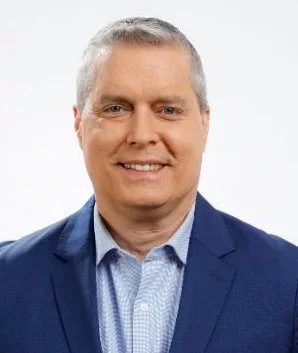
In this ever-changing multimedia world, sports journalist David Haugh has not just survived but thrived. After long tenures at two newspapers, he now comments on Chicago sports on a morning drive-time radio show and two evening television broadcasts.
Along the way, he’s built a reputation for integrity, able to convey the passion and excitement of sports without losing his ability to call out a problem or an injustice. He infuses his presentations with insight and compassion to remind his readers, listeners and viewers that coaches, players -- and even the front-office folks -- are people, too
“Through it all and on every platform, he remains the journalist he’s always been, bringing an identical ethic to his work: to be fair and thorough, to never spare the truth,” wrote Mike Kellams, who was Haugh’s editor for several years at The Chicago Tribune, in a nominating letter. “He works for the benefit of his listeners, not those in power.”
Before he became a sports reporter and commentator, Haugh was an athlete. He lettered in three sports for his high school in rural North Judson, Indiana, a standout on the small school’s powerhouse football team.
Playing for Ball State University, he was an All-Mid-American-Conference safety and an academic All-American. Haugh was inducted into the Indiana Football Hall of Fame in 2025.
Haugh spent several summers at the South Bend Tribune as its first-ever sports department collegiate intern. After earning his master’s in journalism from Northwestern University, Haugh joined the Tribune fulltime. He quickly honed his writing and reporting skills in a range of sports and began to develop his distinctive voice as a columnist. Naturally, Haugh began to focus on the heart of the Tribune’s sports coverage, the University of Notre Dame.
Delivering thorough, balanced coverage of Fighting Irish sports was a core mission of the newspaper. Football, in particular, was a constant challenge. With a worldwide fanbase and immense local clout, Notre Dame trumpeted its good news — and muted the bad. Fans and alumni who grew up during Notre Dame’s golden years expected another national championship every season. Ronald Reagan was still president when they won the last one.
Haugh more than held his own, both with the relentless Fighting Irish public relations machine and with the national reporters who constantly swooped in and out of South Bend.
Haugh was always there with his perspective on the big games. But teaching journalism courses at nearby Saint Mary’s College, he told aspiring sportswriters “the least important part of any column that I write from an event is the score … losers are always more interesting than winners.”
He also knew that some of the most important moments in Notre Dame sports happened off the field.
Haugh never flinched when confronting the ethical problems sometimes faced by the school and its athletes, challenges often underscored by Notre Dame’s status as a leading Catholic university. As a former student-athlete, he showed empathy for players who made mistakes, but he didn’t hesitate to shine a spotlight when it appeared an athlete had received special treatment from the administration or local criminal justice system.
Haugh played a key role in a 1998 Tribune investigation that revealed a young superfan had embezzled $1 million from a local business and used some of it to purchase trips, tickets and jewelry for several Notre Dame football players. No story had struck more piercingly at the university’s carefully cultivated self-image. The next year, deeming the gifts a “major violation,” the NCAA placed the football program on probation for the first time in the university's history.
When a former assistant coach sued the university after he had been fired, Notre Dame lost a jury trial that was filled with messy and embarrassing revelations about the football program. Haugh’s columns pulled no punches.
“Any organization that allows a case with as many salacious disclosures as this one to go to trial is also asking for trouble,” he wrote. “Respect Notre Dame for publicly standing up for the principle of its age-discrimination policy. But you have to wonder if that principle was worth revealing in open court that Notre Dame football is indeed no different than the Nebraskas and Miamis and Florida States of the world.”
In 1999, he was named Sportswriter of the Year by the Indiana Sportswriters and Sportscasters Association, and his work won numerous other awards. By the time Haugh left South Bend to join The Chicago Tribune in 2003, Notre Dame, whose administrators had sometimes complained loudly about his coverage, hosted a going-away party for him.
Chicago is a city filled with passionate and knowledgeable fans and fervently competitive sports journalists. But Haugh’s skills quickly stood out. He was the Bears beat writer and a sports columnist before taking over the prestigious In the Wake of the News column once written by columnist and short story writer Ring Lardner.
Haugh’s career as a print journalist reached its zenith on the night in 2016 when the Cubs won the World Series, arguably the biggest night in Chicago sports history.
That final game in Cleveland ended, after a rain delay and extra innings, at almost midnight. Haugh delivered a masterpiece of column writing on an almost impossible deadline.
“David drew on the team’s legacy, the players who had missed the chance for ultimate glory in their celebrated careers,” said Mike Mulligan, who now cohosts The Score’s morning radio show with Haugh. “There are few people in the country that could have pulled off that feat and captured the complexity of the story like David did.”
Haugh had already transitioned to radio and TV journalism, writing print columns on a freelance basis, when he and the Tribune severed ties in 2020.
Mully & Haugh, which began on WCSR The Score in 2018, was named best morning show by the Illinois Association of Broadcasters last year. In 2024, Haugh added two half-hour TV broadcasts on the Chicago Sports Network to his daily schedule.
His broadcast commentaries are as dauntless and informative as his newspaper columns were.
Kellams wrote, “More people rely upon David Haugh’s point of view to understand the sports world around them than any other voice in the Chicago market.”
Haugh lives in Chicago, but a Hoosier sense of principled determination to get the job done right is still a hallmark of his commentaries.
“Listen to his show for a few episodes and you’ll hear how David has remained loyal to his small-town Indiana roots and the state in general,” wrote Bill Bilinski, Haugh’s sports editor at the South Bend paper.
“I’ve met great writers, great reporters and incredibly prolific workers,” Mulligan said, “but never anyone who encapsulates it all like David.”