
Mary Bryant Tandy
2026
By Ray E. Boomhower
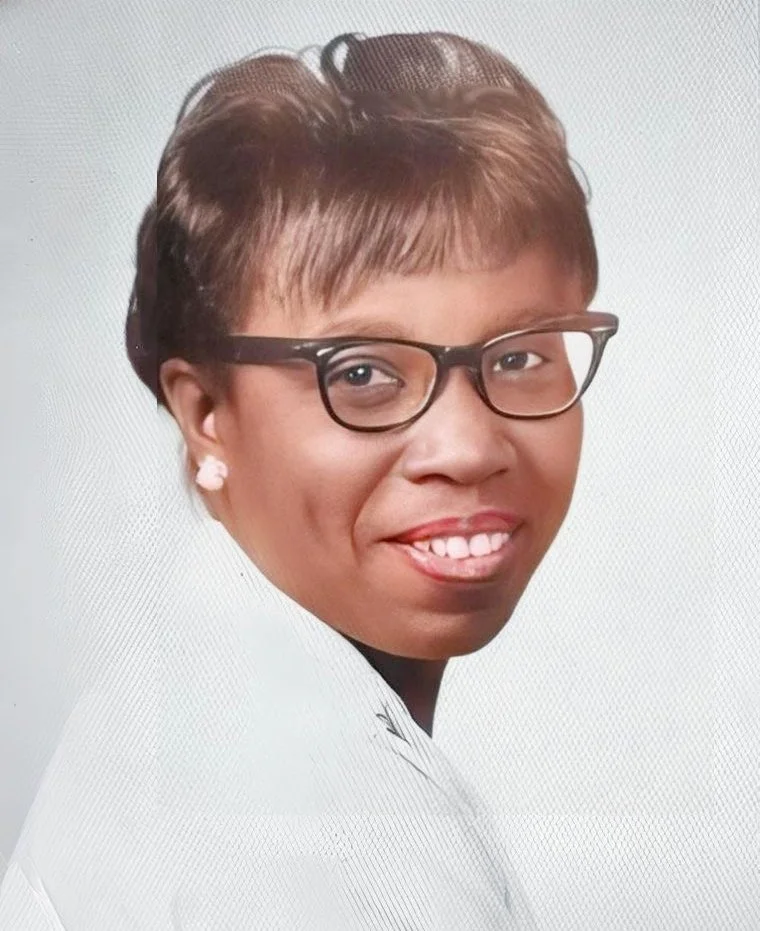
An employee at the Indiana Heraldsince 1970, starting as a secretary before becoming its office manager, Mary Bryant Tandy found herself facing a huge task in June 1983. Opal Tandy, the newspaper’s owner and her husband, had died, making her the new owner, publisher and editor, one of few African American women to be in such a position.
According to her family, upon taking her new position Tandy said: “The Indiana Herald is a big responsibility, and I love the challenge.”
Tandy set out to make major changes to the weekly metropolitan newspaper, located at 2170 N. Illinois St. in Indianapolis, including changing its format from tabloid to broadsheet. Although Opal had filled his paper’s front pages with crime news and photographs, believing it was the only way Indianapolis’s Black community would know about such incidents, Mary wanted to give her readers more variety when it came to news.
“We’re trying to write more about the community, people in the community, what they are doing,” Tandy told a reporter from The Indianapolis News. “It seems like they know the bad things but not the good things that are happening in the community.”
The Herald became one of the first to feature an eyewitness report from a local freelance writer about the Jan. 24, 1987, March on Forsyth County (also known as the Brotherhood March), a momentous civil rights demonstration in Georgia led by Coretta Scott King and Hosea Williams.
To make sure such news got the attention it deserved, Tandy also worked to expand her newspaper’s distribution network. She targeted grocery stores, drug stores and all local newsstands, especially downtown locations. With the advent of the internet, Tandy oversaw the publication of the Herald’s first online news edition from a website via Earthlink.
Indiana Journalism Hall of Fame member Eunice Trotter, who owned and ran the competing Indianapolis Recorder, considered Tandy to be “a singular force” in the city’s media landscape, continuing and expanding upon Opal Tandy’s legacy.
“Always quiet and unassuming, she worked to deliver important, significant information to Herald readers,” Trotter recalled. “Mary was also a quiet force in the Democratic Party, working at the grassroots level to make sure African Americans in Indianapolis were represented.”
Tandy continued to oversee the newspaper’s operations until the age of 90, when her health faltered. During the more than 30 years she made editorial decisions, she frequently, when publishing deadlines neared, could be counted on to remind those within earshot: “We need to get this paper out.” She never missed a weekly deadline.
Tandy arrived in Indianapolis in 1947 from her native Humphrey County, Mississippi, with her then-husband, Eddie Bryant. The couple purchased a home north of downtown near their place of worship, Good Samaritan Baptist Church.
After a severe respiratory illness took her husband’s life, she was left as the sole provider for a family of six children. She found a job as a filing clerk in the records division at the Indiana Department of Revenue, helping spark a lifelong interest in politics. She ran unsuccessful campaigns for a seat on the Indianapolis city council and as state representative.
According to her youngest daughter, Alice Jackson, who worked closely with her as the newspaper’s advertising manager and executive editor, her mother’s “passion was to deliver the best news content to her readers. I witnessed her demonstrate a high journalistic work ethic along with an unswerving commitment and support for African-American print media.”
Davida Jackson, Tandy’s granddaughter, said her earliest childhood memories are of her grandmother conducting her editorial duties at the newspaper.
“It was here under my grandmother’s tutelage that I first learned the ropes of journalism, which ultimately led to the development of my own deep passion for chasing down a good story,” said Jackson, who got her start in journalism working at the Herald and later became the first Black news producer at KWQC-TV in Davenport, Iowa. “My passion for community involvement and my unwavering commitment to delivering news from diverse perspectives all stemmed from the values and dedication my grandmother exemplified throughout her career.”
Tandy supported the next generation of Black journalists through an internship program she developed between the Heraldand Martin University. In 1997, the university honored her efforts by awarding her an honorary doctorate of humane letters for her service to the African American community.
In April 2001, Indiana Gov. Frank O’Bannon awarded her one of the state’s highest honors at the time, the Sagamore of the Wabash. Tandy also received the Pathfinder Award from the National Association for the Advancement of Colored People, as well as the Trailblazer award from the Indiana Black Expo.
Tandy cemented her ties to her community through memberships in a variety of civic and professional organizations, including the Southside Women’s Club, the Indiana Editorial Association and the Marion County Democratic Women’s Club. On the national level, she was a member of the National Association of Negro Business and Professional Women’s Clubs and the National Negro Publishers Association, where she served as treasurer of its Indiana branch.
After spending most of her working life toiling daily at the Herald’s office, Tandy, because of declining health, was forced to close the newspaper in 2016. She died June 5, 2020. Her family said throughout her long and busy life, she lived by a simple tenet: “To live a Christian life, to respect others, so they will respect you in return.”