
Sue Morrow
2026
By Linda Negro
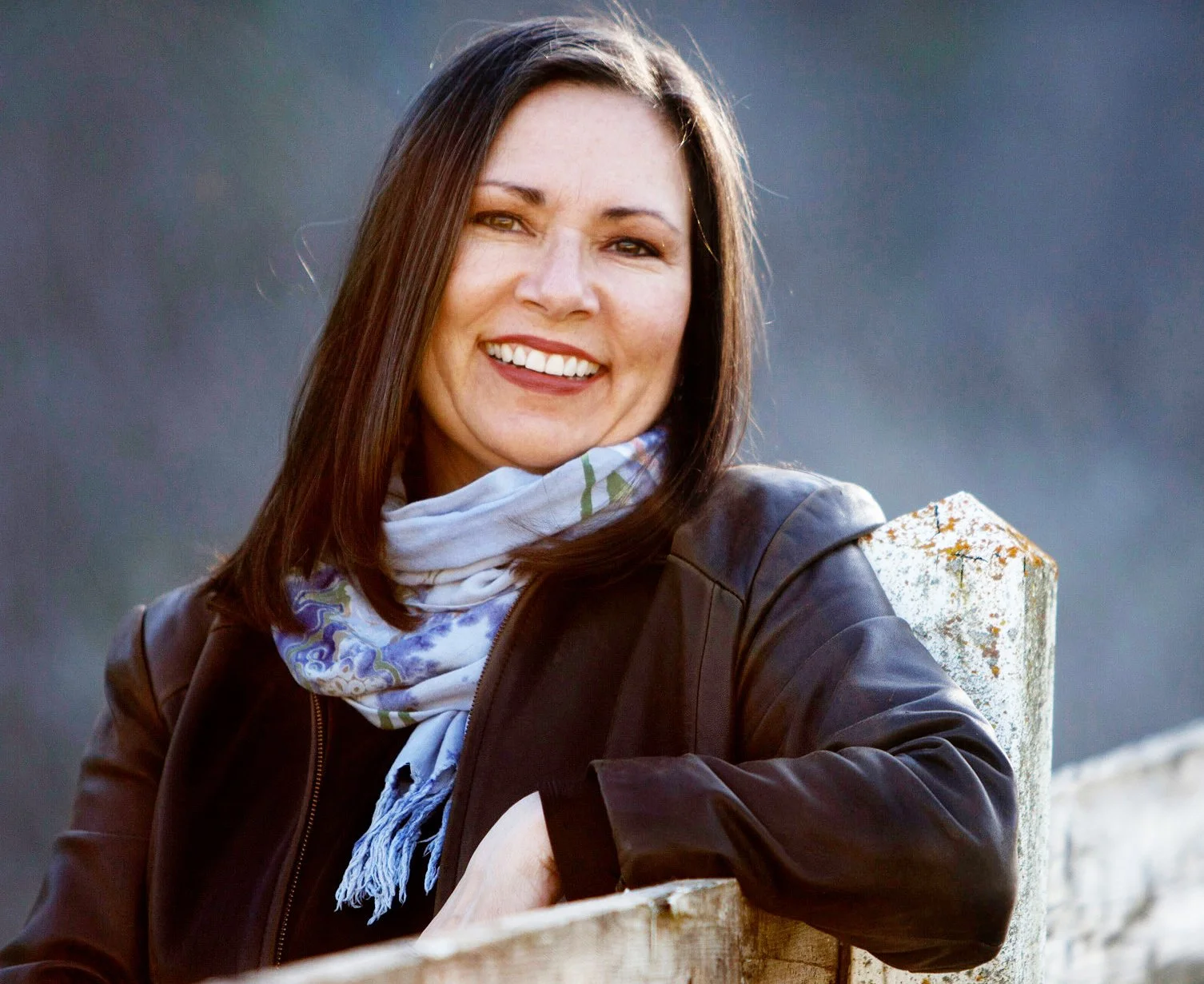
When a book at an Evansville bookstore caught Sue Morrow’s eye, she immediately sat down on the floor, read it from cover to cover, and knew what she wanted to do.
“That’s it,” she recalls after reading Shooter by news photographer David Hume Kennerly.
The Indianapolis native set out to find a way to enter this world of newspaper photography. While working in a framing shop in Owenboro, Kentucky, she attended the1980 National Press Photographers Association Flying Short Course in Louisville. There, she met photographers from the Owensboro Messenger-Inquirer who quickly became her mentors. They urged her to attend Indiana University and introduced her to journalism professors John Ahlhauser and I. Wilmer Counts.
That move to Bloomington in 1982 and particularly the class Words and Pictures formed the foundation for Morrow’s career. Before graduating in 1988, she designed IU's Arbutus yearbook, which led to her “first real journalism job” as a designer at the Atlanta Journal-Constitution. She also was a 1986 photo intern at the (Bloomington) Herald-Telephone and a 1987 picture editing intern for the (Louisville, Kentucky) Courier-Journal.
Morrow worked at the San Jose Mercury News, Tampa Bay Times, Sacramento Bee, Atlanta Journal-Constitution and Boston Globe. As the assistant managing editor for photography at the Times, she and the photo staff were recognized with numerous awards for photography and editing in competitions including Pictures of the Year International, Best of Photojournalism and Society of Newspaper Design. Morrow was POYI’s picture editor of the year in 1994.
“My strength was being an advocate for photography and photographers,” she reflected in a column she wrote reflecting on her career. “It can be an odd journey. You’re a conduit for everyone else’s work and have to do it with little ego and rarely a byline.”
Morrow was the picture editor and designer for the 2007 Pulitzer Prize for Feature Photography at The Sacramento Bee, which documented the life of a 10-year-old with neuroblastoma. In 2013, Morrow edited and designed the Pulitzer Finalist in Feature Photography for The Bee’s “A Grandfather’s Sorrow.”
In 1989, Morrow edited and designed the black and white photographic documentary project, “When AIDS Comes Home,” at the Atlanta Journal-Constitution, which was nominated for the Pulitzers. That project, which required editing thousands of black and white film images, remains one of the AJC’s most-read stories and continues to be recognized for its historical values.
She served seven years as editor of News Photographer Magazine, edited and designed seven Best of Photojournalism books, and served on the board of the Kalish Workshop, an immersive five-day course focused on visual storytelling.
“Morrow rarely accepted a stipend for speaking engagements, for serving on the faculty of workshops or for judging contests. When she did, she most often donated them to the National Press Photographers Foundation,” said John Rumbach, former editor and publisher of The Herald in Jasper, Indiana.
Scott Sines, former managing editor at the (Spokane, Washington) Spokesman-Review and at the (Memphis) Commercial Appeal, said in a nominating letter that Morrow is “the vanguard of a new kind of newspaper editor -- a progressive thinking, talented, unapologetic woman surviving and thriving in what was, and still largely is, a man’s world. The inappropriate comments … she waded right through that stuff, she had bigger things to do, there were stories to be told.”
Today, Morrow works part time for CatchLight, virtually mentoring seven photographers in small newsrooms across the country. She also teaches at the School of Visual Communication at Ohio University in Athens, Ohio. As the Knight Fellow at OU in 2010-11, she photographed and produced the short documentary “Born to Die” about Last Chance Corral, a unique horse rescue in Athens. She was a visiting professional in the School of Journalism at OU in 2017-18.
Morrow is the youngest of four daughters born to Mary and Charlie Morrow of Indianapolis. She credits her parents with preparing her for this career.
“My mother had a lot to do with me having a camera in my hand; she still had an Instamatic with hundreds of images on a CD card when she died at 103,” Morrow said. “She documented every single aspect of our family, including the pets.”
And her father was a constant consumer of news, from reading Thomas R. Keating’s daily column in the Indianapolis Star to Time magazine. Mary Morrow saved issues of Look magazines for her daughter.
Getting into the IU journalism program required a harder path for Morrow than traditional students. First, she needed to reestablish residency in Indiana after living in Kentucky. Then, she had to work full time at a frame shop while taking classes.
In the six years it took to graduate, Morrow grew more confident in her photo editing and design than she had in her own photography by comparison to younger fellow students. Morrow’s path to a relationship with other students was to use her skills to mat and frame their work.
She was 30 years old when she graduated from IU School of Journalism in 1988.
“I was seven to eight years older than the other students, and they were all so much better than me. My strength in advocating for photography and photographers felt right.”
It became clear that editing was her path. And to do that you have to know people. Using the techniques of those who mentored her, Morrow focused on the personality of her staff. She learned to listen to each of them.
Morrow said, “Hire talent but also hire personality. And don’t waste time on what they are not good at. Make them stronger at what they gravitate to.”
After leading photographers, editors and publications through the COVID-19 pandemic and a nearly 80 percent decline in visual journalism positions since 2005, she now works to prepare journalists for a future of more transitions. She teaches more than photography and editing skills.
“I teach how to treat people, the ethics of things, how to think about things and the importance of making deadlines,” she said.
“Long before the terms ‘influencer’ or ‘creator’ were part of our journalism lexicon, Sue Morrow created compelling stories by understanding that photography, video, graphic design and powerful writing were all tools for the same purpose, not competing forms,” said Neil Brown, president of the Poynter Institute, a school for journalists, in a nominating letter.
Scott Sines wrote that Morrow “knows points and picas, but more to the point, Sue Morrow knows people and how to coax their best work out of them.”
In addition to her continued work in photojournalism, Morrow, who was diagnosed with multiple sclerosis in 2009, has helped raise thousands of dollars for the National Multiple Sclerosis Society.
Morrow and her husband, photojournalist Michael Rondou, live in Athens, Ohio, with their “most perfect cat,” Barnadette "Barney" Peters.